

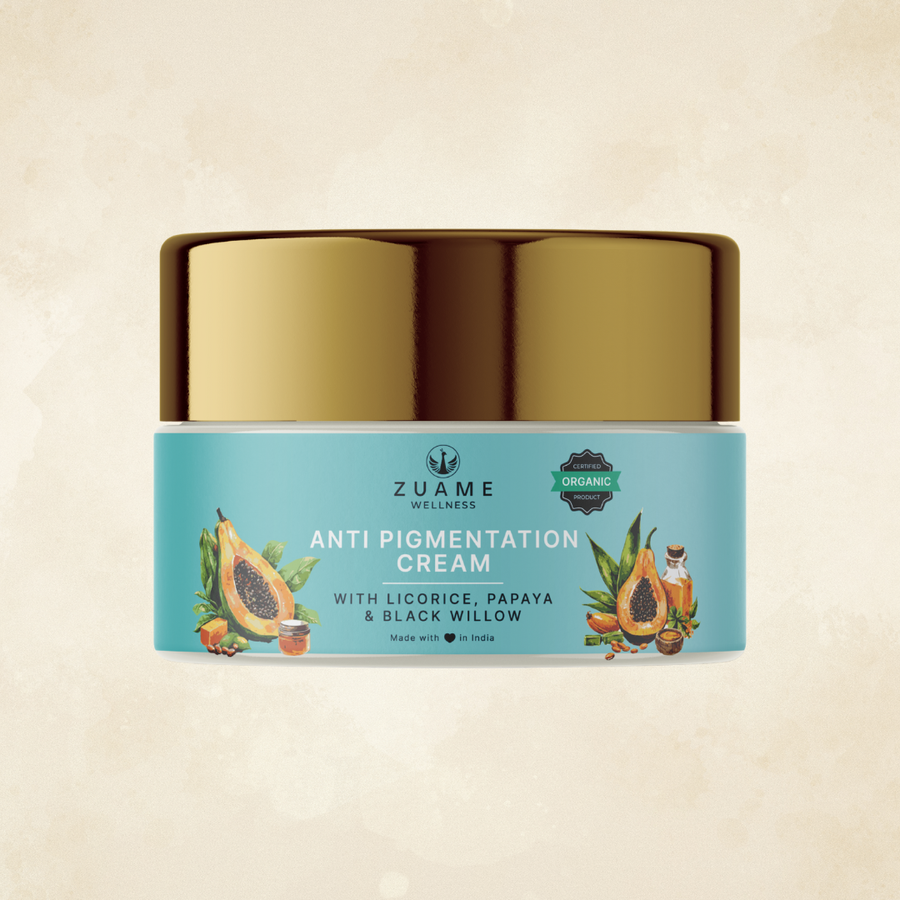
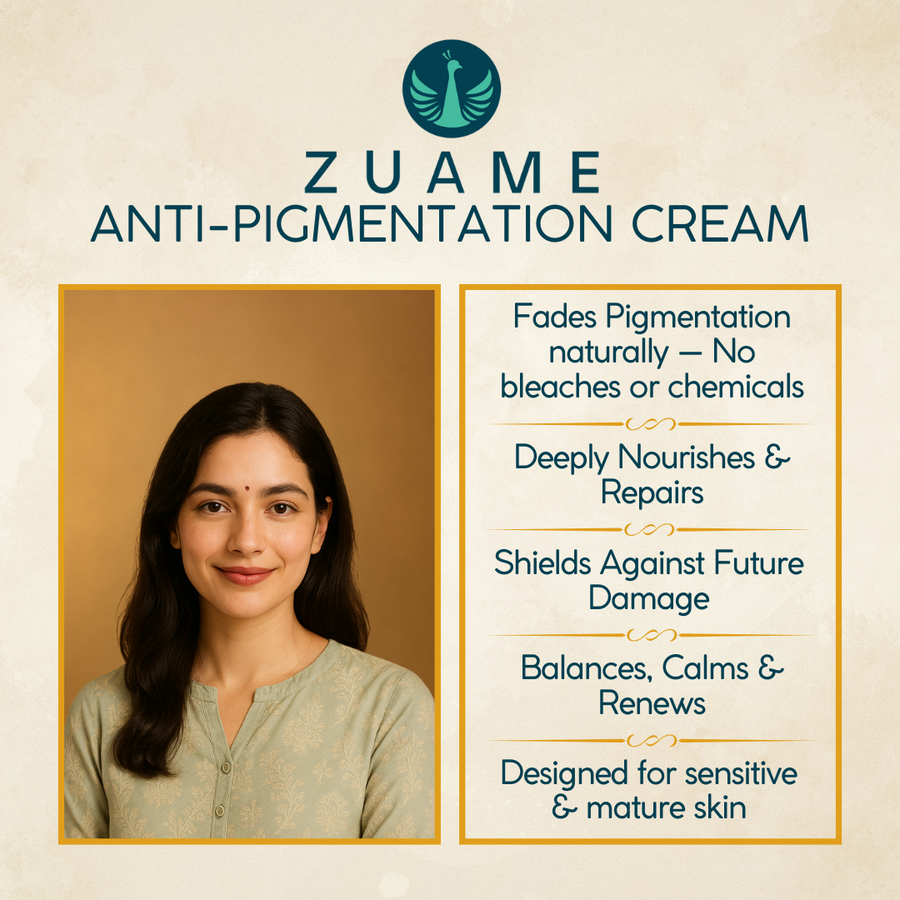
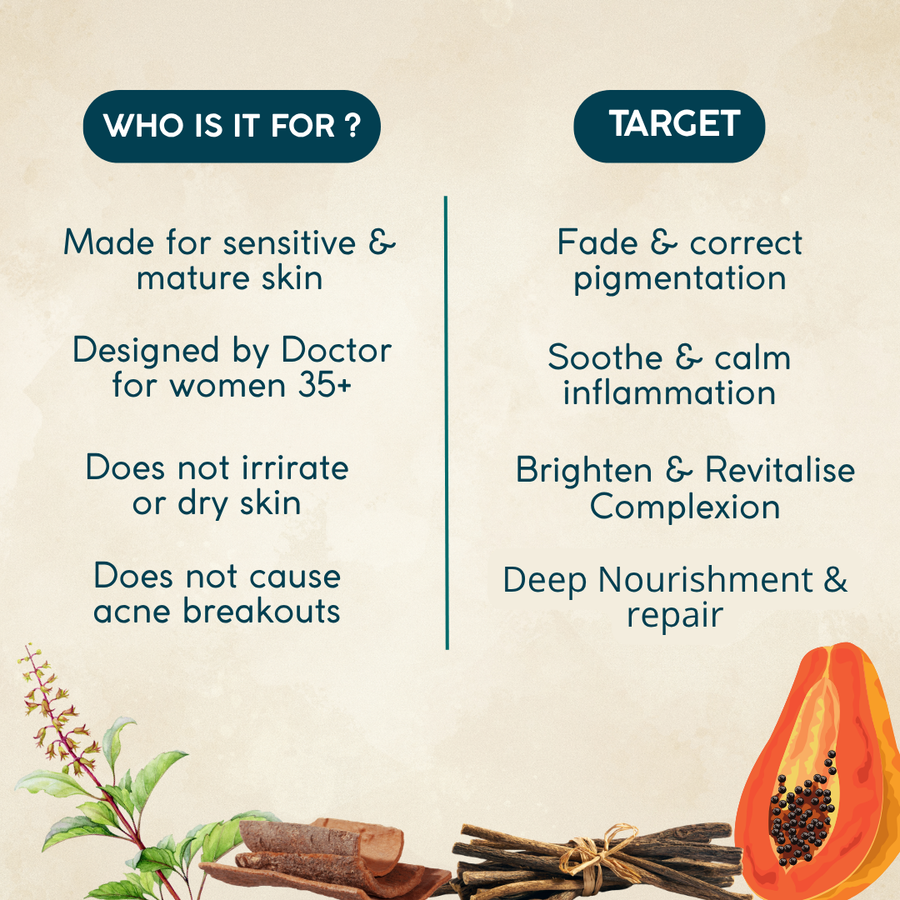
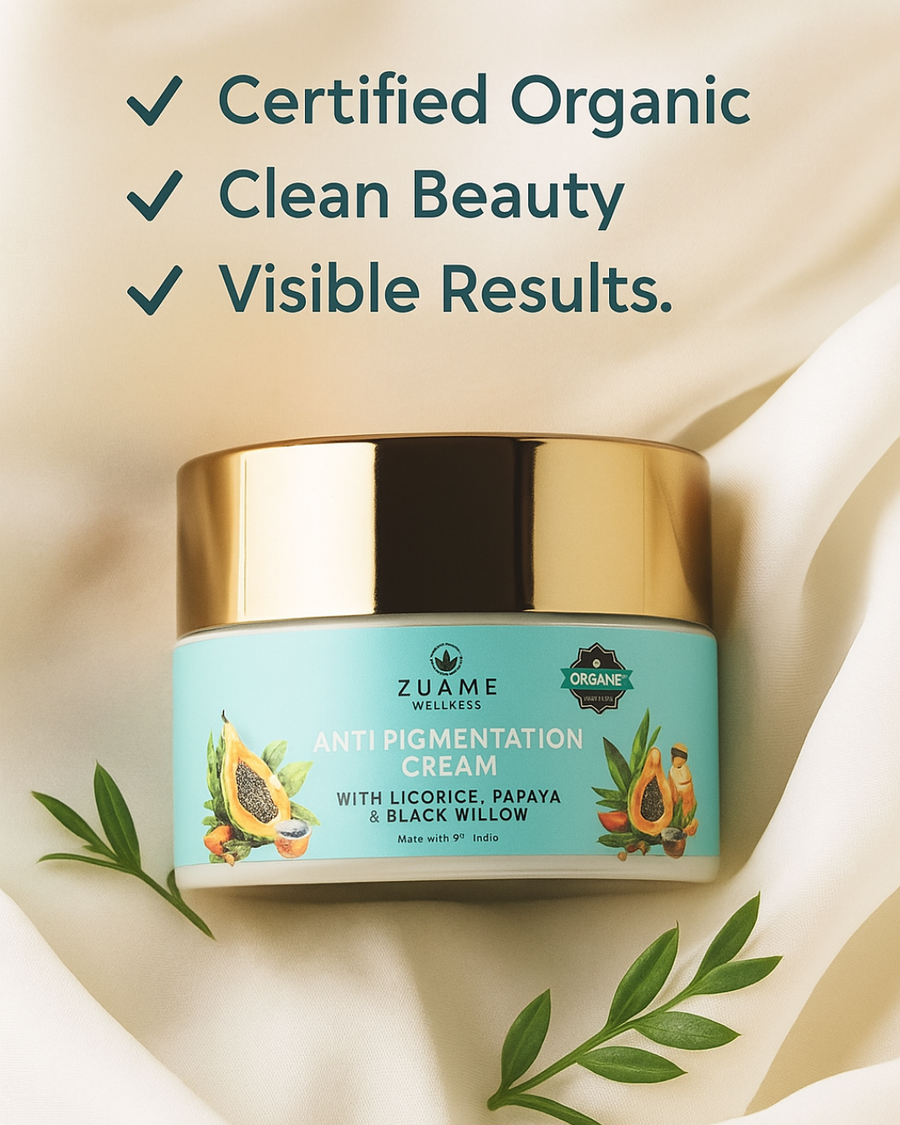
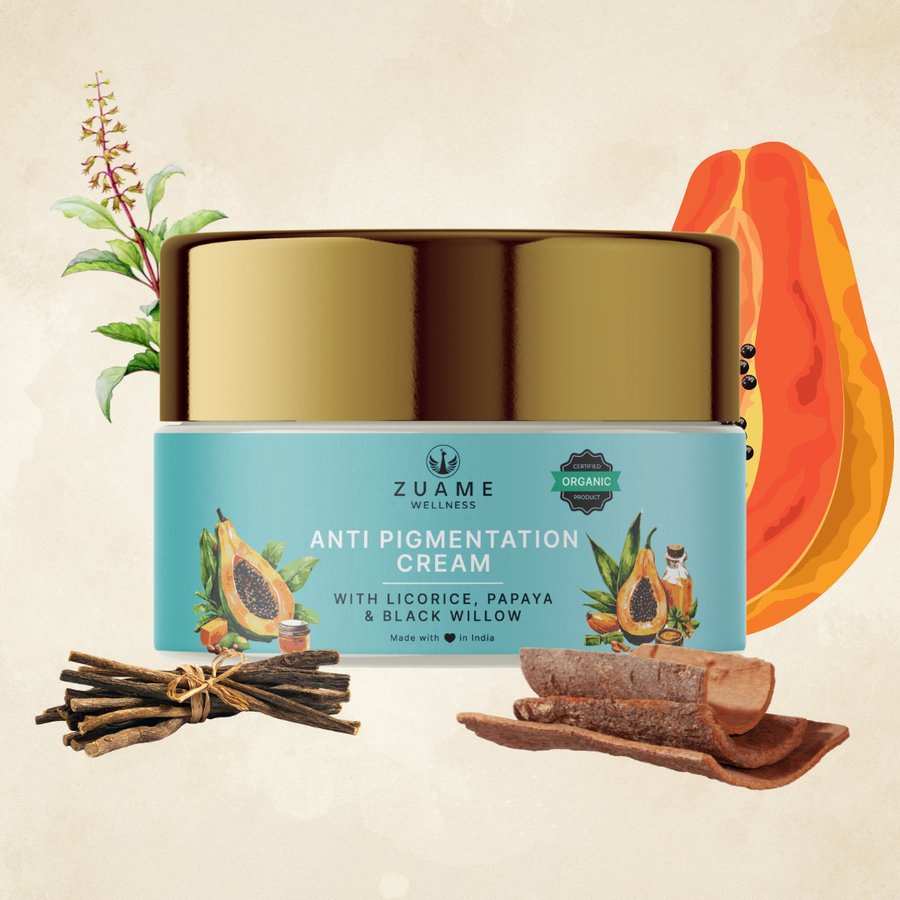
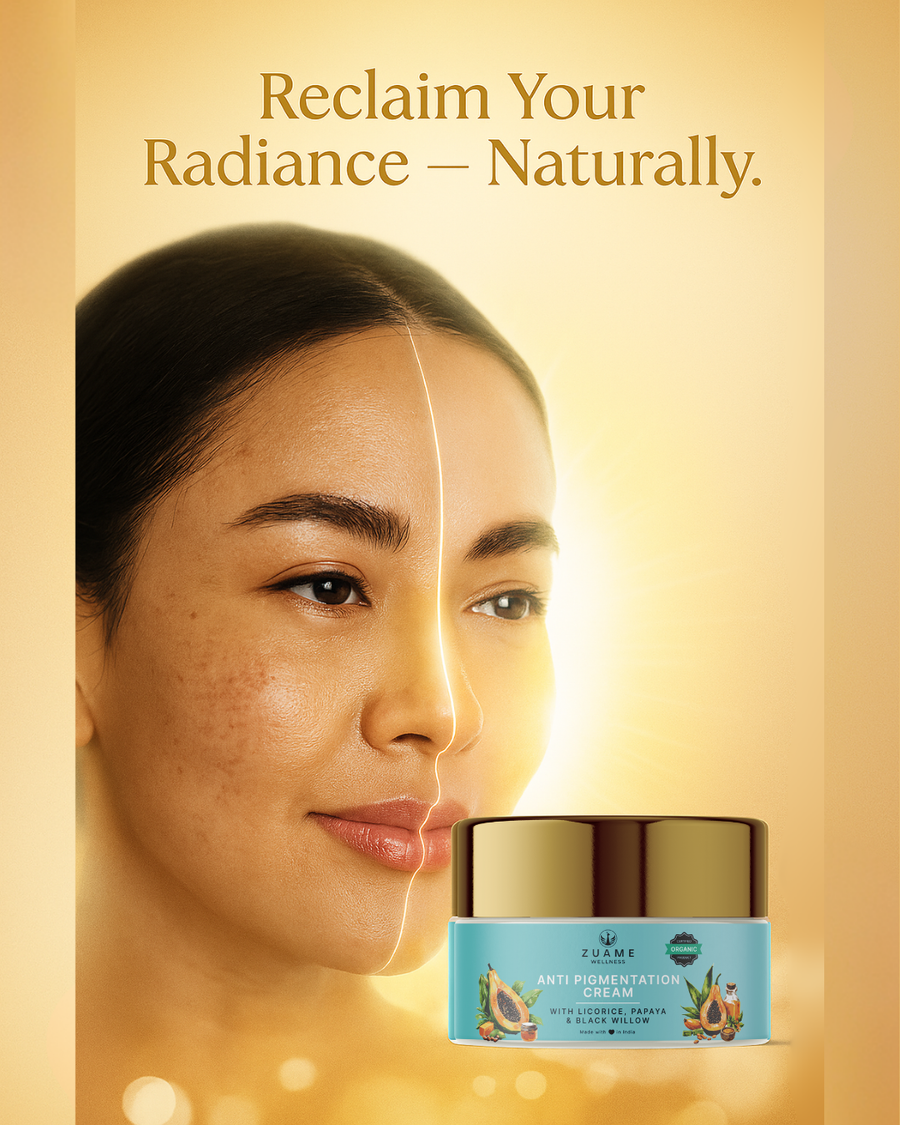
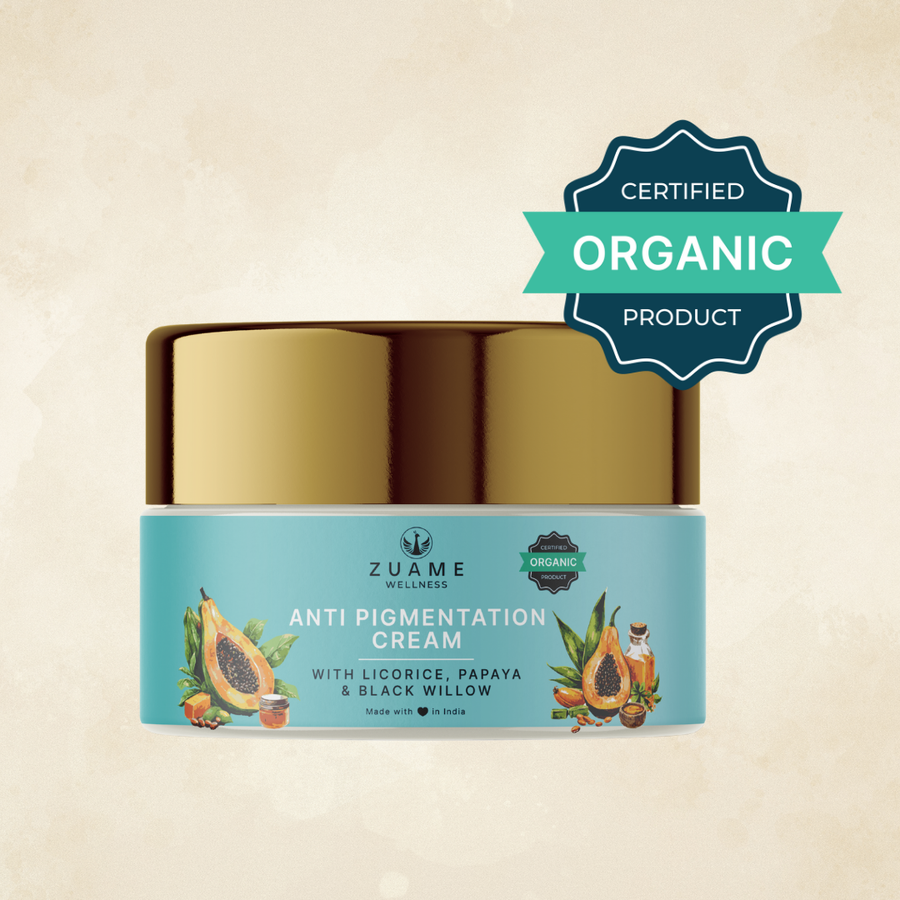
Zuame Anti Pigmentation Cream for Women 35+ | Dark Spot Corrector with Licorice, Willow Bark & Tulsi | Reduces Pigmentation, Brightens Skin Tone & Restores Natural Glow
Your skin didn't stop glowing. It stopped being heard.
Size
MRP inclusive of all taxes
Not sure this is right for you? WhatsApp us — quick reply.
Product Details
Why Women Choose Zuame
Doctor Trusted & Recommended
Used and recommended by leading dermatologists across South India.
No Chemicals. Period.
Zero parabens, sulfates, silicones, mineral oil, or synthetic fragrances.
60-Day Ritual Guarantee
If you don't see visible improvement in 60 days, we'll refund every rupee.
From the First Use
Your skin feels the difference before your mirror does.
100+ Stores in South India
Available at AyurCentral, Trust Medicals, Glamzy & 100+ retail stores.
6,000+ Skincare Rituals
Real women, real results across all skin types.
Clinically Inspired · Traditionally Proven
The Numbers Speak
said their skin felt calmer and less reactive within the first week.
reported visible fading of dark patches by week six with daily use.
noticed their skin tone appeared more even within the first 2 weeks of consistent evening use.
What to Expect
Your Results Timeline
Week 1–2
Skin tone feels more even. The patches stop visibly deepening. Skin surface is calmer after application.
Week 3–4
Edges of dark patches begin to lighten. Skin tone more consistent in natural light.
Week 6-8
Visible fading. Dark patches measurably lighter. The morning mirror assessment changes.
Month 3
Significant clearing. Patches reduced. Less coverage needed.
Key Ingredients
- Licorice Root (Yashtimadhu)
- Turmeric Extract (Haridra)
- Indian Gooseberry (Amla)
- Papaya Enzymes
- Willow Bark (Devdaruka)
- Aloe Vera (Kumari)
- Holy Basil (Tulsi)
Clean Beauty Promise
Free From
- Hydroquinone
- Kojic Acid
- Parabens
- Silicones
- Mineral Oil
- Synthetic Fragrances
- Artificial Preservatives
- Synthetic Colours
Your Daily Ritual
As part of your evening ritual, about 20 minutes before sleep, cleanse your face and neck with the Zuame Anti-Pigmentation Face Wash. Pat skin until just slightly damp — not fully dry. Slightly damp skin allows the botanical actives to penetrate rather than sit on the surface.
Take a very small amount — a pearl-sized quantity is sufficient for face and neck. This formulation is concentrated. More does not accelerate results.
Dot across forehead, both cheeks, nose, chin, and along the jaw and neck. Include the hairline and temple area if pigmentation extends there. Massage in gentle upward circular strokes until fully absorbed.
Use every evening as the final step of your night ritual: Cleanse → Cream. For consistent results, do not skip the wash step — the Face Wash prepares the skin surface for the cream to work at depth.
Pro Tips
1. For a wedding, reunion, or function in three months: begin the ritual tonight without interruption. By week six to eight, visible fading is typically established — dark patches that required heavy coverage will require significantly less.
2. If your pigmentation worsens during periods of intense stress or at specific phases of your cycle — continue daily use through those periods rather than pausing. The Turmeric and Licorice actives are most important precisely when hormones are most active.
3. This cream is most effective when used with the Zuame Anti-Pigmentation Face Wash. The Face Wash clears the skin surface and prepares the follicular pathway; the cream then works at depth. Using one without the other reduces the result.
4. In case you have done any chemical treatments on your skin recently, you will need to wait for the effects of those chemicals (2-3 weeks atleast) to wear off before you start using the cream. Patch test recommended always.
ROUTINE PLACEMENT
Evening Ritual — Step 2 of 2 (after Anti-Pigmentation Face Wash)
Once daily, every evening
Frequently Asked Questions
Sacred Heritage
Rooted in a Tradition That Never Needed Chemistry
Pigmentation that appears in your late thirties and forties is not a surface condition. It is an internal one — made visible on the skin.
Here is what actually happens: oestrogen begins to decline, making the skin's melanocyte-regulating mechanisms less reliable. Cortisol — chronically elevated in women carrying sustained professional and household pressure — directly stimulates melanogenesis, the overproduction of pigment that gathers as dark patches at the cheeks, across the forehead, above the lip. Years of sun exposure compound this. The result is hyperpigmentation that worsens with stress, deepens with hormonal fluctuation, and does not respond to products that only address the surface layer.
Most brightening products work by suppressing melanin production chemically. They produce results that require indefinite use to maintain and often worsen when discontinued. None of them address why the melanin overproduction is happening in the first place.
This formulation works differently.
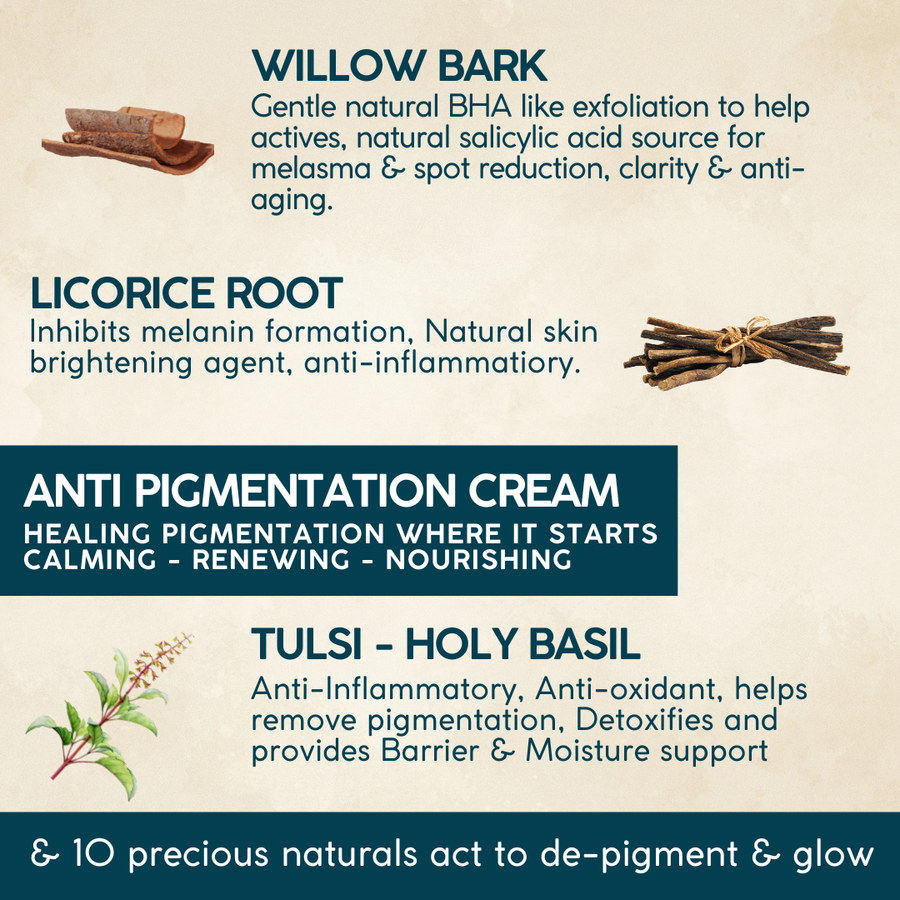
Licorice Root (Yashtimadhu) contains glabridin — a compound with well-documented evidence for inhibiting tyrosinase, the enzyme that triggers melanin production, without the rebound effect of synthetic inhibitors. Classical texts classify it as Varnya — complexion-restoring — and the mechanism is now understood at the biochemical level.
Turmeric Extract (Haridra) carries curcumin, which suppresses melanogenesis at the level of gene expression and carries potent anti-inflammatory activity. Siddha physicians have used Haridra for complexion restoration for centuries. It also directly addresses the cortisol-driven inflammation that makes pigmentation worsen under stress.
Indian Gooseberry (Amla) delivers one of the highest concentrations of natural Vitamin C in botanical form. Vitamin C is essential to the oxidative processes that allow pigmentation to become permanent — Amla addresses this while supporting collagen synthesis and deep tissue restoration.
Papaya enzymes (papain) provide controlled exfoliation of the pigmented surface layer — not chemical stripping, but enzymatic clearing of dead cells that make patches appear more pronounced. This allows the depigmenting actives to reach the melanocytes directly.
Willow Bark (Devdaruka) contributes Salicin — a natural salicylate that both exfoliates and reduces the microinflammation that triggers melanin overproduction after sun exposure.
Aloe Vera (Kumari), Neem Oil, Cocoa Butter, Shea Butter, Wheat Germ, Olive Oil, and Holy Basil (Tulsi) complete the formulation — carrying the actives, supporting the skin barrier, and ensuring absorption without greasiness or congestion.
These are not ingredients chosen for familiarity. They are a Siddha physician's formulation for the specific biology of Indian-skin hyperpigmentation — without synthetic suppressants that create dependency, without hydroquinone, without anything the skin cannot recognise.
Certified organic. Free from Parabens, Silicones, Mineral Oil, Synthetic Fragrances and Hydroquinone. Not for treated skin. In case of questions, feel free to contact us on whatsapp before you buy.
Founder's Note

When my pigmentation was at its worst — across my face, neck, and arms — I remember choosing what to wear to a family function based on what would cover the most. Not as a style choice. As management.
A Siddha physician asked me when I had last tended to myself without guilt. I couldn't answer — because I couldn't remember.
The formulation she gave me wasn't designed to bleach or punish my skin. It was designed to listen to what the inflammation was saying. Twelve weeks later, the patches had faded significantly. The real shift happened earlier — when I stopped treating my skin as something to be managed and started noticing it was actually responding.
That is what this cream is for. — Soumya, Co-Founder
— Soumya, Co-founder
Reviews
Pairs Beautifully With
Common Questions
Frequently Asked Questions
Q: Can I use this alongside other skincare products, or during perimenopause?
A: Yes. There are no synthetic hormones, parabens, or endocrine disruptors. Women experiencing perimenopausal hormonal shifts — a common trigger for new or worsening pigmentation — typically respond well because the formulation works with the skin's mechanisms rather than overriding them. If using other actives (retinol, vitamin C serums), we suggest that you pause using your existing actives at least for the first month of starting the Anti-pigmentation cream.
Q: I have sensitive or reactive skin. Is this safe for daily use?
A: Yes. The formulation contains no hydroquinone, no kojic acid, no synthetic acids, and no harsh chemical exfoliants — the ingredients most commonly responsible for sensitisation in brightening products. The exfoliation is enzymatic (Papaya) and botanical (Willow Bark Salicin), which is gentler on reactive skin. Women who find conventional brightening products irritating typically respond well to this formulation.
Q: How quickly will I see a visible difference?
A: Skin tone feels more even and patches stop visibly darkening within the first week. Fading begins to be visible at the edges of patches by week 3–4 with consistent daily evening use. Visible clearing — patches measurably lighter — is typically seen by week six. Full restoration of even tone requires three to four months. These are not aspirational timelines — they reflect what the ingredient evidence supports for Indian skin.
Q: My pigmentation worsens under stress and at certain times of the month. Is this relevant?
A: Yes, and it is precisely why this formulation exists. Cortisol directly stimulates melanogenesis — stress makes pigmentation worse in a way that is biological, not incidental. Turmeric (curcumin) in this formulation specifically addresses cortisol-driven melanin overproduction. Hormonal fluctuation across the cycle is also a trigger. Consistent daily use through these periods is more important than intensive use when skin is calm.
Q: I've used brightening creams before and seen no lasting results. Why would this work differently?
A: Most brightening products use chemical inhibitors that suppress melanin production while you use them and rebound when you stop. This formulation addresses why melanin overproduction is happening — inflammation, hormonal dysregulation, cellular stress from years of synthetic skincare. When the underlying conditions change, the pigmentation responds, and does not return at the same rate. The approach is correction at the root, not surface suppression.